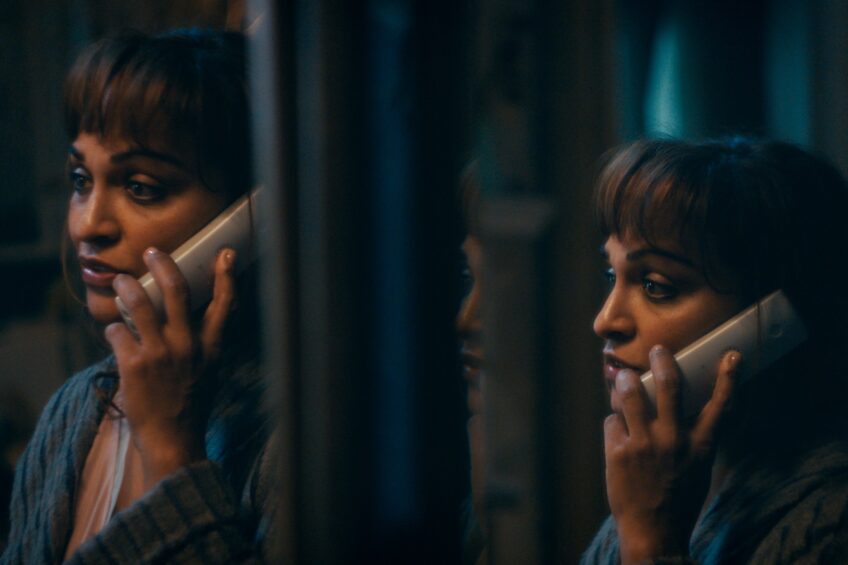
Women of the Year Screening of La Voix humaine
18th August 2025 by Natalie Burns
Join us at the Chiswick Cinema for this unforgettable screening on November 30th
We’re absolutely thrilled to announce a special screening of La Voix humaine, a film of Jean Cocteau’s iconic one-woman play reimagined as music drama by Francis Poulenc, starring Danielle de Niese and directed by James Kent for BBC 2.
Jean Cocteau shows how the telephone becomes a tool of coercive control. Elle, the lone protagonist, clings to her relationship while her silent partner gaslights her toward despair. Written in 1920, the story remains strikingly relevant today.
The Royal Opera House present this new production created by Trademark Films, Painted Doll and K418 Arts shot on location in Paris and London with music from the Royal Opera House Orchestra conducted by Antonio Pappano.
Enjoy a glass of sparkling wine or a mocktail on arrival at 17:30 and enjoy an opportunity to meet with the Women of the Year and our guests. The screening will begin at 18:00, followed by an intimate Q&A between Danielle de Niese and our very own Leonie Mellinger.
Where: The Chiswick Cinema, 94-96 Chiswick High Rd., Chiswick, London W4 1SH
When: Sunday November 30th, 17:30 – 20:00
Price: £47
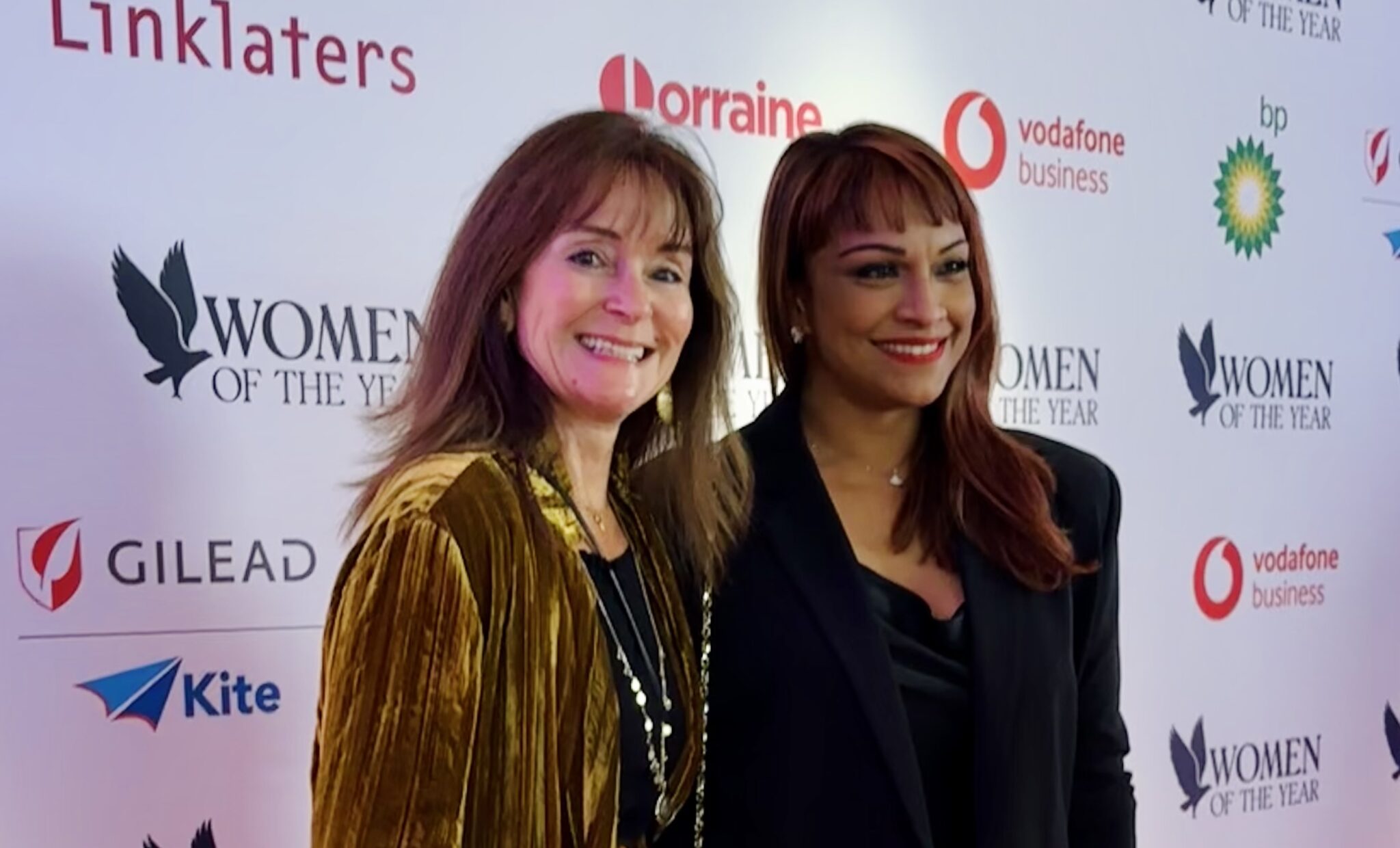
Leonie Mellinger with Danielle de Niese at Women of the Year
About La Voix humaine
La Voix humaine, as visualised by Emmy and Bafta-winning director James Kent (The Aftermath, Testament of Youth, A Music Memorial film from Auschwitz), offers an unprecedented cinematic interpretation of Poulenc’s masterpiece. As an hour long dramatic one-off, it features only one performer, the character known only as Elle. Regarded as a career-defining challenge, it has attracted many actresses and singers since it was premiered in Paris in 1930 as a play by Jean Cocteau and subsequently turned into a musical drama by his friend Francis Poulenc in 1959. Both had suffered relationship breakdowns in their lives and channelled their emotions into this work. It is now edging towards cult status with recent film versions starring Rosamund Pike (directed by Patrick Kennedy in 2018), and Tilda Swinton, (directed by Pedro Aldomovar in 2020) and a stage version featuring Ruth Wilson (directed by Ivo van Hove in 2022).
Soprano Danielle de Niese, an opera singer known for her dramatic capabilities, tackles this music drama in a film directed and shot entirely on location for BBC 2. It is perhaps her greatest challenge yet as she navigates Elle’s decline, from hope and nostalgic memory of her love, to despair and finality of its end, for one late afternoon via a series of telephone calls with her departing lover, Monsieur. As envisaged by Cocteau, and brilliantly set to music by Francis Poulenc, the viewer is skilfully placed as a silent observer of Elle’s desperate conversation, captured in the intimate and claustrophobic setting of a single apartment. Her hopes, her longings, her nostalgia, and her final acceptance, all illuminated by a powerful score conducted by Antonio Pappano. We feel her pain as she grapples with love and loss throughout one late afternoon via a single, suspenseful, often interrupted, telephone call with her departing lover.
Written originally in 1928, Cocteau was examining change that the technology of the telephone was to bring to humans and how they conducted their relationships. It’s a theme which is as relevant today as it was then, especially in this time when feelings of isolation and separation still scar us, and technology can be our only link to the wider world.
“In spite of it all, we are connected by this telephone… this line is the last thing tying me to us”
Produced by David Parfitt (The Father, Shakespeare in Love) Nikki Weston & Maurice Whitaker, directed by James Kent (Aftermath, Testament of Youth), with cinematography from Laurie Rose (High Rise, Rebecca) and designed by Peter Francis (The Father, The Children Act) the film will premiere on BBC2 in the spring. With an orchestral score recorded at the Royal Opera House, the film breaks new ground, requiring Danielle de Niese to record her vocal line on location. This technique allows her to approach the work in a way that no live stage performance could ever allow. With extraordinary intimacy and emotion she takes the viewer deep into her personal grief supported by some of Poulenc’s most beautiful and emotionally telling music, resulting in an innovative cross genre work of art.
About Danielle de Niese
Danielle de Niese is more than just the most magnetic presence in music, or the woman described by the New York Times magazine as “Opera’s Coolest Soprano.” She is also a performer who’s shredding the rulebook with her unique combination of stage credibility, musical theatre style and TV presenter profile. Not only has she thrilled audiences worldwide from the Metropolitan Opera to Covent Garden, she won an Emmy Award as a TV host at 16, made her Broadway debut at 18 in Les Miserables, has performed at Carnegie Hall with rapper L L Cool J as well as British pop sensation Mika on ITV, and been the voice of Ridley Scott’s movie Hannibal, recording with Hans Zimmer and performing on screen. She has also triumphed in the West End in Man of la Mancha and Aspects of Love, and has just returned from her debut as Carmen in a new production for Opera Australia playing to sold out houses in Sydney and Melbourne.
Recent on-screen work includes La Voix humaine (Trademark Films) for BBC 2 and The Merry Widow, also for the BBC, plus a number of documentaries.
She will appear in the spring in two new documentary films for Sky Arts.
Offstage, de Niese is passionate about music education, an advocate for children’s rights and has been named by Marie Claire magazine on its influential list of “Women on Top”. She served as an Ambassador for HRH the Prince of Wales’ foundation for children and the arts. As an Ambassador, de Niese was involved in advocating for music education and children’s rights. Her work as an official Ambassador of Voice for the International Rescue Committee combines personal appearances with David Milliband, field trips across the globe, and specially created TV appearances to draw attention to the ongoing refugee crisis.